A Strategic Squad-Based Horror Game in which players navigate across arctic labyrinths overrun by freakishly colorful monstrosities in this ‘Lovecraft-on-LSD’ experience. Created as part of a team for EAE 4510 – Senior Capstone Project.
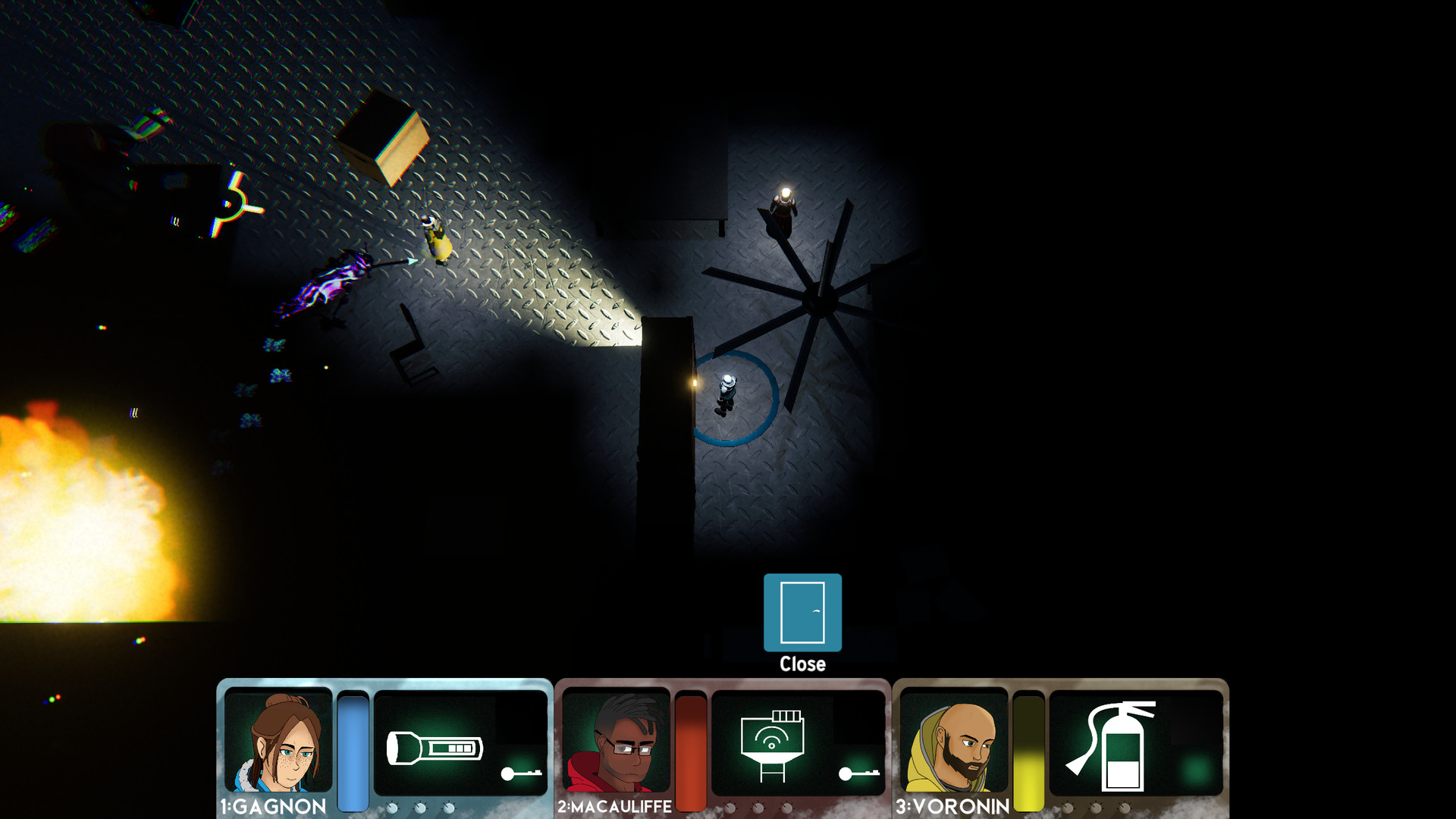
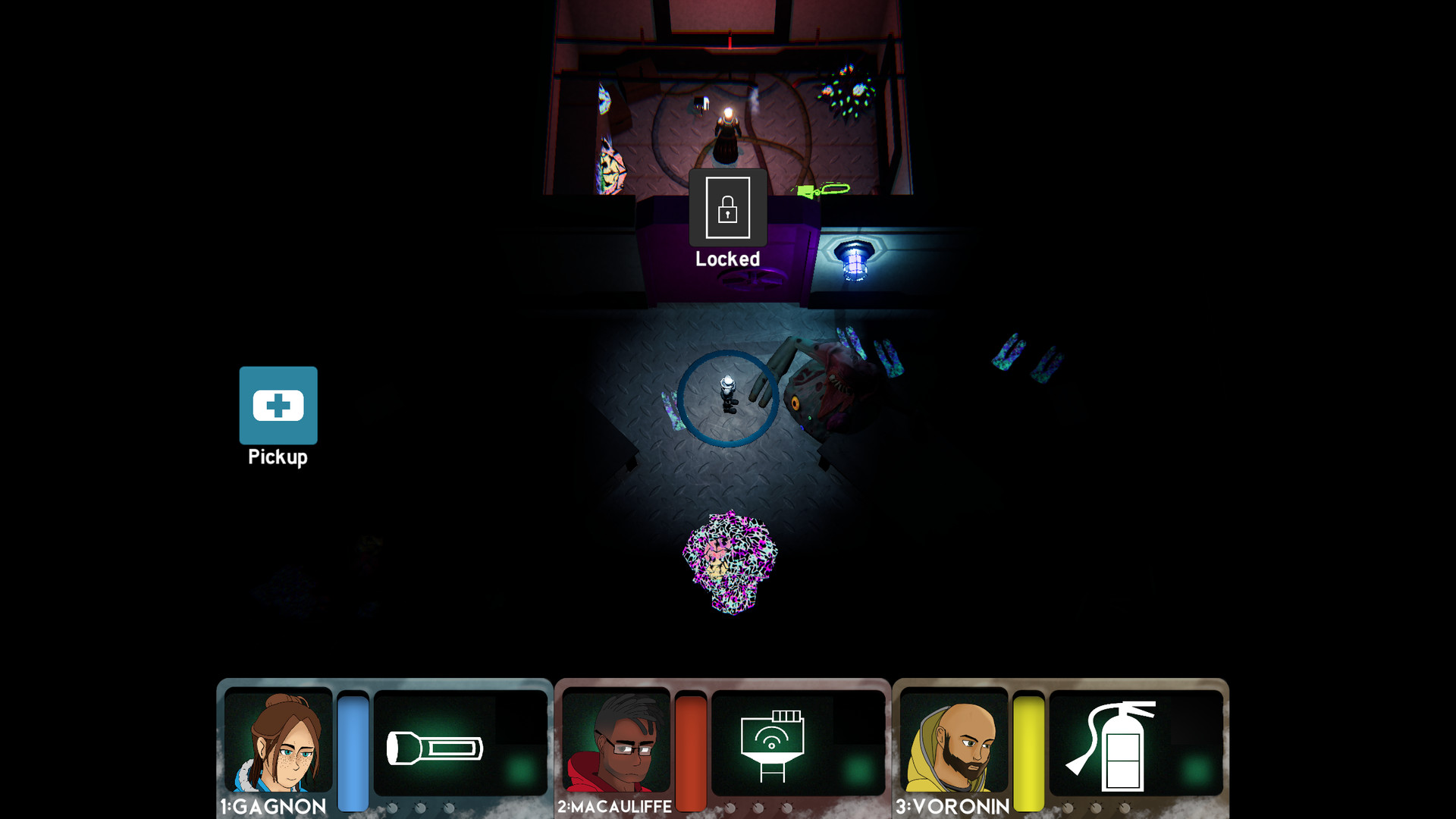
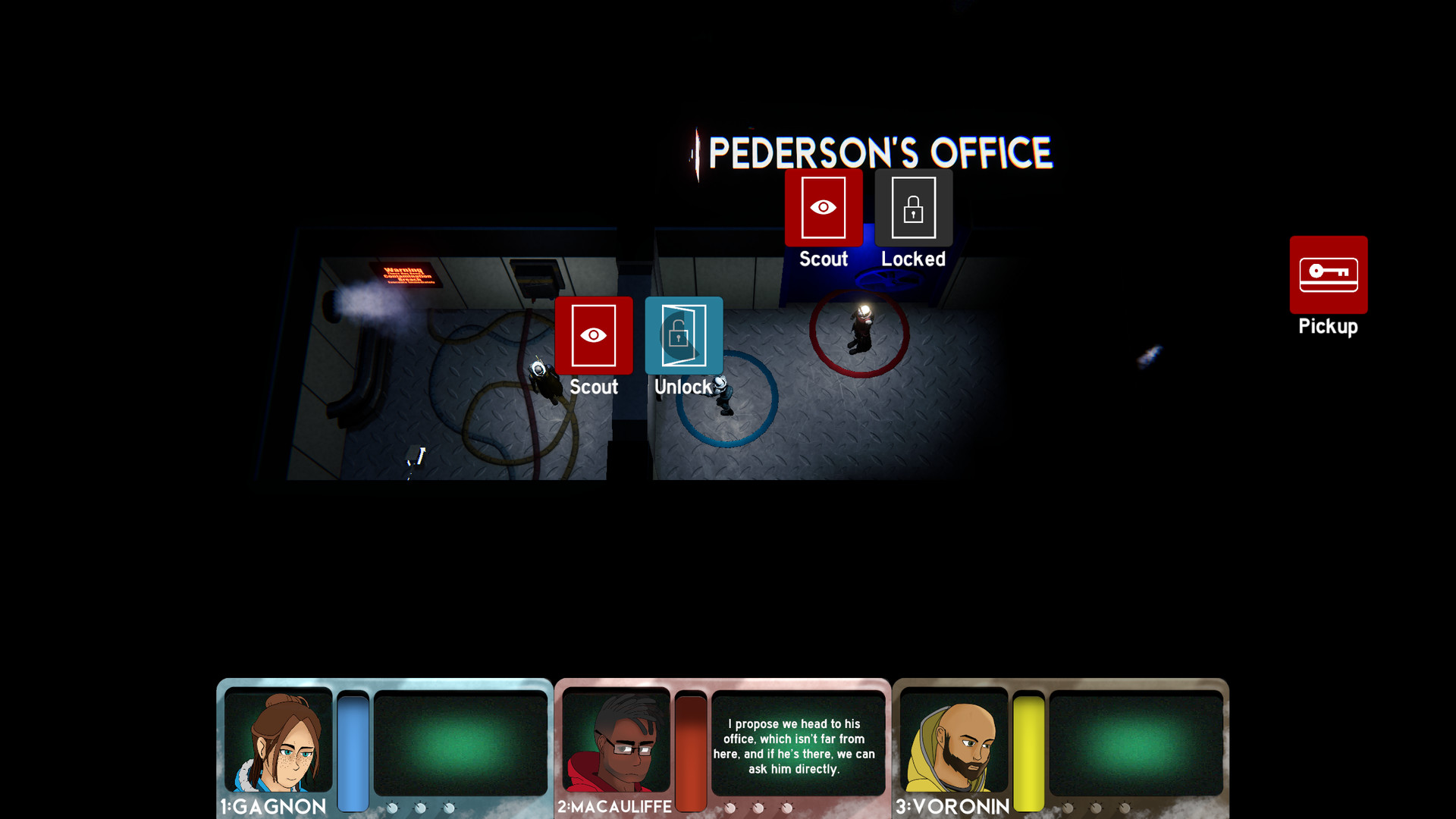
Desaturation Point officially launched on Steam and Itch.io on April 28, 2022, after an early access period that started on March 24.
Personal Contributions
Here are some of my personal contributions to this project.
- The inventory system. I implemented a simple, but robust and adaptable inventory system for our game, based on a design document provided by the design team. Every character has a tool slot (which serve as each unit’s signature item), and a standard item slot (which contains consumables such as medical kits and batteries for tools, along with keys and power cells to complete objectives). I also implemented functionality for two of the three tools: the flashlight, which extends a unit’s vision and acts as a light source, and the fire extinguisher, which can put out fires or make smoke screens to help slow down pursuing enemies.
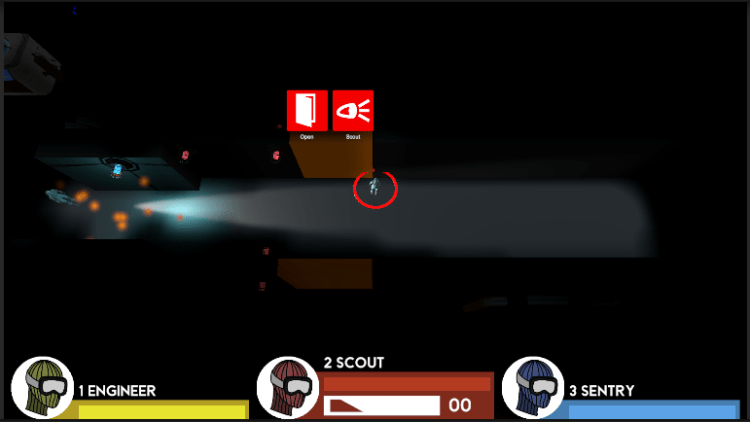
- The fog-of-war system. We knew from the beginning that we wanted a fog-of-war system to obscure the player’s vision and build a sense of mystery and suspense as they explored the environment. When we switched our project over to the Unity Universal Render Pipeline (URP), it broke the original system that we had in place for fog-of-war, since several features that were used to produce fog-of-war in the original build were no longer available in URP. I took on the responsibility of finding a new way to replicate the original effect; after some experimentation, I managed to create an effect that made effective use of render textures and decal projectors to obscure portions of the map that were outside of the units’ sight ranges, and used raycasts to hide enemies and other objects when they weren’t in a unit’s sight range and line-of-sight.
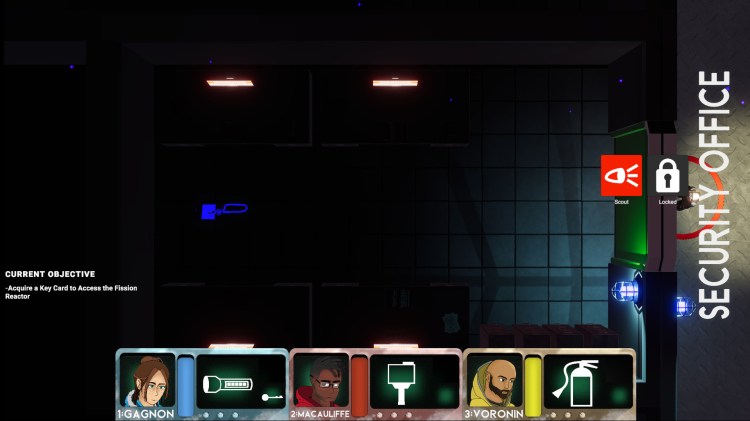
- UI and UX improvements. I helped to implement the code that powers the game’s main user interface (specifically the parts pertaining to units’ inventories), added a simple aim indicator for the fire extinguisher, and added room labels that can be turned on and off to help guide the player through the environment and signpost areas that they’ve explored.
- Writing and story concepting. I was on the team that put together the setting, characters, and overarching narrative for Desaturation Point. This included figuring out the characters’ names, personalities, relationships, and how they fit into the abandoned arctic research station where the game takes place.
- Bug fixes. Once the main mechanics and systems were implemented, my attention primarily turned to bug fixing. My experience with the inventory system, character controllers, and user interface meant that I was well-suited to address multiple serious bugs and implement fixes before release.
 Evan Parry