My apologies for the long radio silence. I’ve been hard at work on my senior capstone project, which is a game called Desaturation Point. Desaturation Point is a strategic, squad-based horror game set in an arctic research facility full of freakishly colorful monstrosities.
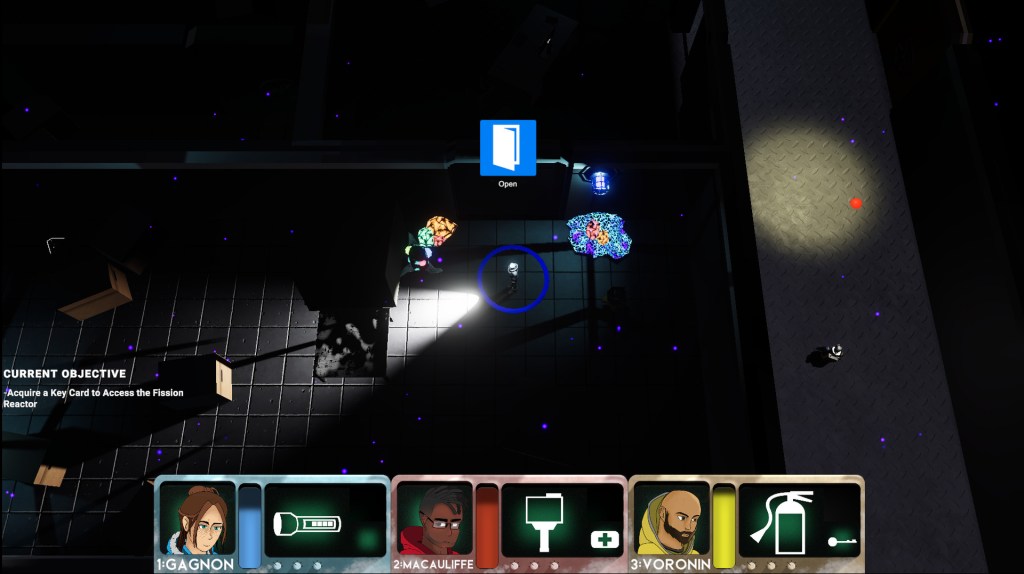
I’ve been very proud to help develop this game as part of a team of about twenty talented students from the University of Utah’s Entertainment Arts and Engineering program. I’ve primarily worked as an engineer, though I have contributed to several important design discussions.
Here are a few of my specific contributions:
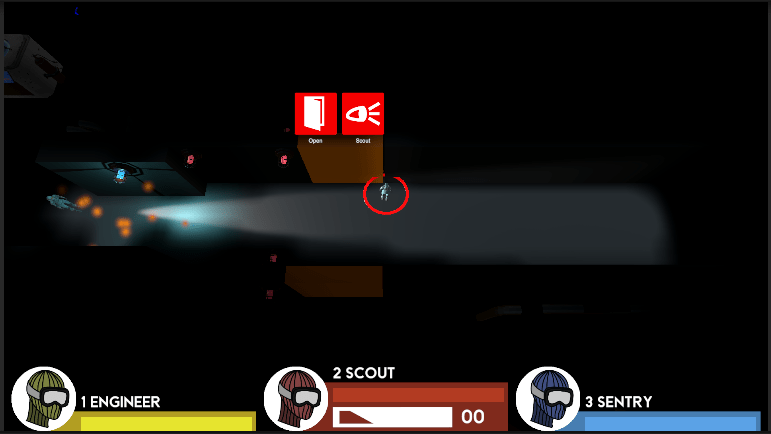
- The inventory system. I implemented a simple, but robust and adaptable inventory system for our game, based on a design document provided by the design team. Every character has a tool slot (which serve as each unit’s signature item), and a standard item slot (which contains consumables such as medical kits and batteries for tools). I also implemented functionality for two of the three tools: the flashlight, which extends a unit’s vision and acts as a light source, and the fire extinguisher, which can put out fires or make smoke screens to help hide the player’s units from enemies.
- The fog-of-war system. When we switched our project over to the Unity Universal Render Pipeline (URP), it broke the system that we had in place for vision-obscuring fog-of-war, since several features that were used to produce fog-of-war in the original build were no longer available in URP. I took on the responsibility of finding a new way to replicate the original effect; after some experimentation, I managed to create an effect that made effective use of render textures and decal projectors to obscure portions of the map that were outside of the units’ sight ranges.
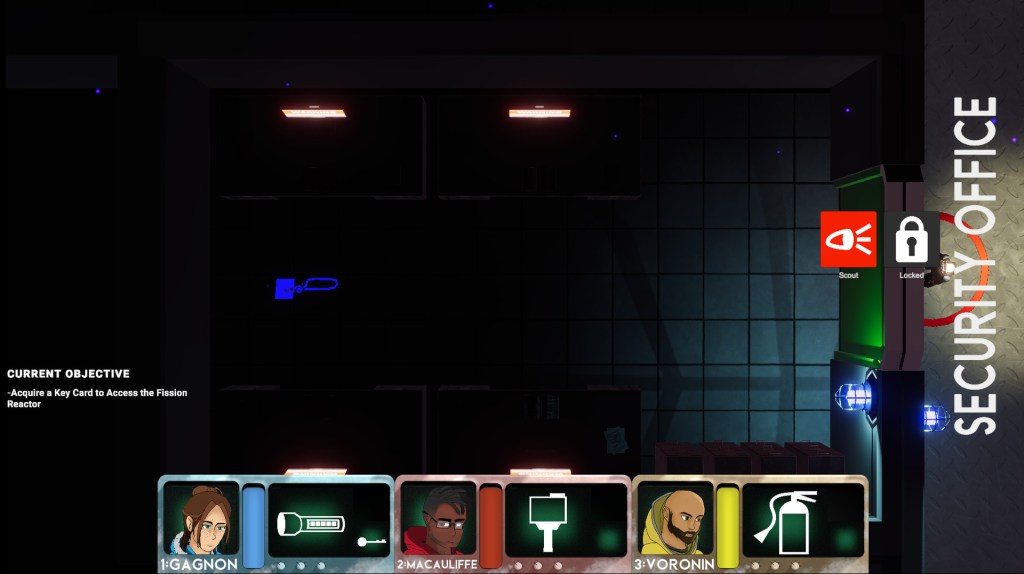
- UI and UX improvements. I helped to implement the code that powers the game’s main user interface (specifically the parts pertaining to units’ inventories), added a simple aim indicator for the fire extinguisher, and added room labels that can be turned on and off to help guide the player through the environment and signpost areas that they’ve explored.
We’ve still got a fair amount of work that still needs to be done before our final release in May, but I’m proud of what we’ve managed to accomplish so far.
If you’re interested in giving the game a try right now, our current playtest build can be found on Itch.io.
We’re also going to be releasing on Steam! Our page can be found here, and the game should become playable through Steam within the next few weeks.
 Evan Parry